
Urban apartments are shrinking while housing costs continue to climb. Micro-studios replace spacious lofts, and tiny homes challenge traditional notions of adequate square footage. Within these constraints, residents confront a design paradox.
The assumption persists that murals demand expansive walls and generous dimensions, yet compact interiors actually benefit most from strategic wall art. Limited space concentrates visual impact, making every design decision matter more intensely than in rooms offering abundant square footage.
Professional mural services understand this counterintuitive truth. FeelFlow Space transforms confined quarters through optical techniques that manipulate spatial perception rather than accepting physical limitations.
Where traditional decoration fails in tight quarters, painted illusions succeed by engaging the brain’s processing of depth, dimension, and visual boundaries. The emotional experience of living in small spaces improves dramatically when walls suggest expansion rather than confinement.
Understanding Spatial Perception
Human brains interpret spatial volume through visual cues rather than measuring actual dimensions. Horizon lines, vanishing points, color temperature, and implied depth all communicate size information that the mind processes automatically.
This cognitive phenomenon creates opportunities for designers who understand how perception shapes experience. The suggestion of space beyond visible walls psychologically extends rooms, even when physical boundaries remain unchanged.
Dark, enclosed feelings plague windowless rooms and basement apartments where natural light never penetrates. The cave effect compounds size limitations, making already small spaces feel oppressive. Strategic murals introduce implied light sources and atmospheric depth that counteract this compression.
Awkward proportions, including tunnel-like hallways and low ceilings, can be effectively addressed by designs that rebalance dimensions through visual correction rather than structural renovation.
Visual clutter accumulates quickly in compact quarters where storage needs, multiple functions, and frequent doorways create busy surfaces. Cohesive murals unify disparate elements by providing a continuous backdrop that organizes rather than adds to chaos.
Plain box rooms lacking architectural interest gain character through surface treatment when budget or rental restrictions prevent actual renovations. These painted solutions deliver impact without permanent structural changes.
Techniques That Expand Through Illusion
Trompe-l’oeil windows stand among the most effective spatial expansion techniques. False openings suggesting views beyond actual walls create psychological breathing room in confined quarters. Gardens, cityscapes, and natural vistas work equally well depending on the desired atmosphere.
Photorealistic renderings require accurate perspective and careful attention to light source consistency, ensuring the illusion maintains believability when viewed from various angles within the room. Stylized treatments offer similar expansion benefits while reducing technical complexity.
Beyond windows, painted doorways and archways suggest continuation into imaginary spaces. Built-in shelving illusions create the illusion of storage while maintaining actual floor space. Architectural details, including columns and moldings, introduce sophistication without consuming physical volume.
These techniques are particularly beneficial for basement apartments lacking natural light, interior bathrooms requiring ventilation suggestions, and narrow hallways that need visual breaks in their tunnel-like progression.
Linear perspective utilizes vanishing points to create the illusion of depth on flat surfaces. Single-point perspective works beautifully for creating straightforward depth, while two-point approaches handle corner installations elegantly.
Atmospheric perspective shifts color saturation and detail density to mimic how distance affects visual clarity, reinforcing the illusion of expansive space. Layering foreground, middle ground, and background elements establishes a dimensional hierarchy that draws the eye progressively deeper into the composition.
Color Theory Applications
Cool tones, including blues, greens, and purples, naturally recede from viewers, making the walls appear to recede perceptually. Light values maximize this effect while reflecting available illumination throughout the space. Desaturated hues soften visual boundaries, making walls feel less confining.
Monochromatic schemes unify awkward rooms by eliminating color transitions that fragment space. Strategic placement matters as much as selection—darker colors on shorter walls pull them forward while lighter treatments on longer walls push them back, rebalancing problematic proportions.
Semi-gloss and satin finishes bounce light around rooms, multiplying the effect of limited natural illumination. Metallic accents catch and spread available light, creating shimmer that suggests luminosity.
Pearl and iridescent pigments add dimension through their interaction with changing light conditions throughout the day. These reflective strategies are particularly effective in windowless bathrooms and interior rooms where natural light sources are scarce.
Pattern scale defies conventional wisdom in tight quarters. Large-scale designs often expand rather than shrink space by reducing visual stopping points and creating a singular, impactful effect. Oversized florals, bold geometrics, and fewer larger elements prove more effective than busy patterns composed of many small details.
Directional patterns guide eye movement strategically—horizontal elements widen narrow spaces, while vertical compositions heighten the perception of low ceilings. Open negative space within designs prevents claustrophobia while maintaining visual interest.
Style Approaches for Limited Square Footage
Minimalist and contemporary murals align naturally with compact living through their visual simplicity. Clean lines, limited palettes, and abundant negative space reduce mental clutter while maintaining spacious feelings.
Single-color geometric shapes, simple line drawings, and monochromatic gradients provide sophistication without overwhelming tight quarters. Abstract forms suggest rather than depict, allowing imagination to extend boundaries beyond painted surfaces.
Nature and landscape murals offer psychological benefits through their connection to the outdoors and expansive landscapes. Forest depths with layered trees, ocean horizons that extend infinitely, and sky studies that open upward all provide an escape from physical confinement.
The treatment matters significantly—watercolor approaches maintain lightness while photorealistic renderings create dramatic depth. Cool greens and blues in nature scenes reinforce the receding effect while retaining the biophilic connection that improves wellbeing in urban environments.
Urban and architectural murals embrace rather than escape the compact urban reality. Distant cityscape horizons, window views suggesting streets below, and industrial texture illusions add character without demanding space.
Trompe-l’oeil moldings, false built-in shelving, and library wall illusions introduce architectural interest impossible to achieve through actual construction in small quarters. Typography-based designs create focal points through single powerful words or carefully placed phrases that communicate personality without cluttering surfaces.
Room-Specific Applications
Small bedrooms present unique challenges, where furniture often dominates the floor space and walls require calming rather than stimulating treatments. The headboard wall serves as the primary canvas, accepting nature scenes, soft abstractions, or ceiling-integrated designs viewable while reclining.
Serene blues, gentle greens, and soft neutrals support rest while maintaining spatial openness. Lighting considerations include both natural window light and bedside illumination that interact with the mural throughout evening and morning hours.
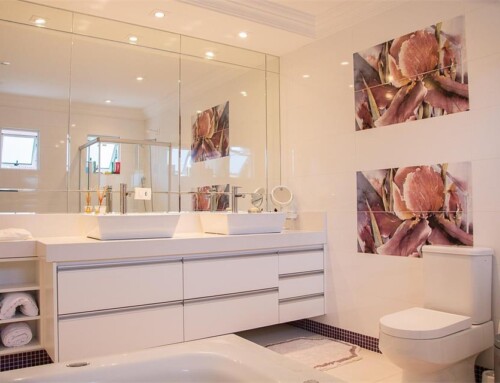
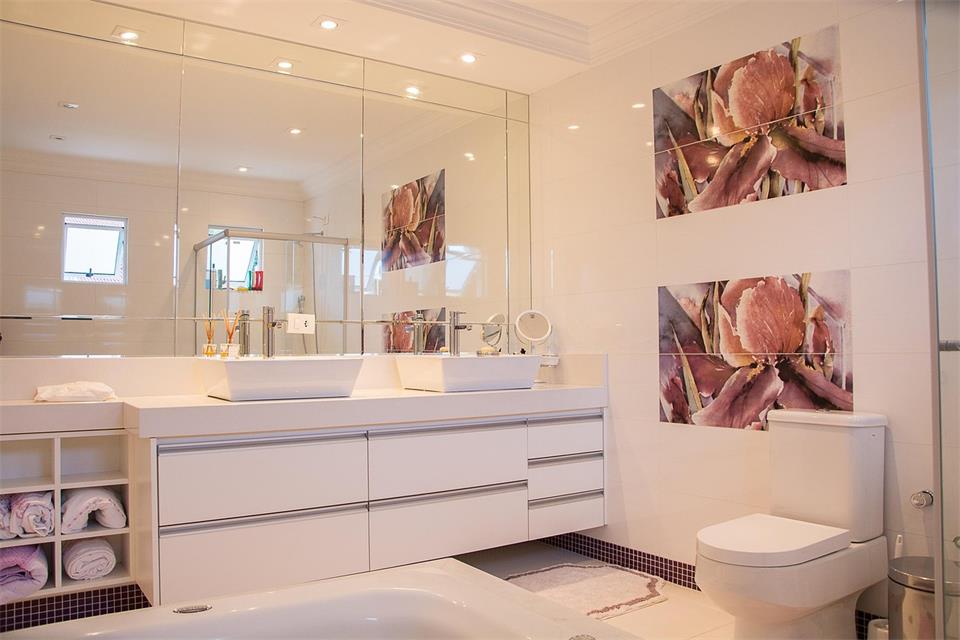
Compact bathrooms require moisture-appropriate materials and placement strategies that accommodate fixtures, mirrors, and limited uninterrupted surfaces. Proper paint selection prevents mold growth and deterioration in high-humidity environments.
Spa-like natural scenes, window illusions that introduce implied natural light, and subtle pattern work all expand these typically windowless spaces. The wall above toilets and areas surrounding tubs offer prime real estate for transformative designs.
Narrow hallways suffer from tunnel effects, which murals counteract through the use of horizontal elements, light colors, and perspective techniques, creating the illusion of false depth. Opening one side to imaginary spaces eliminates the oppressive sensation of a parallel wall.
Gallery wall illusions and window series, suggesting exterior views, transform purely functional passages into interesting design features. High-traffic considerations require washable finishes and avoiding delicate details at hand height, where contact occurs frequently.
Multi-functional studios benefit from murals that unify rather than fragment the space. Continuous designs flowing across multiple walls create cohesion, while subtle shifts in color and composition define zones without physical barriers.
Television walls, behind-sofa statements, and vertical elements drawing attention upward all serve specific purposes within the overall scheme. The scale must balance impact with livability, as residents experience these murals throughout all their daily activities.
Technical Foundations
Surface preparation significantly determines the longevity and appearance quality of murals. Wall texture issues become more noticeable in small spaces, where viewers naturally position themselves closer to the surfaces.
Damage repair, proper priming, and achieving a smooth finish all require professional attention before paint application begins. Rental situations require particular attention to damage deposits, permission requirements, and eventual restoration planning.
Paint selection affects both immediate appearance and long-term durability. Professional-grade formulations offer superior coverage, color accuracy, and resistance to wear—the finish choices, including matte, satin, and semi-gloss, impact light reflection and cleaning ease.
Custom color mixing ensures precise coordination with existing elements while achieving specific atmospheric effects. Low-volatile organic compound formulations are critical in confined spaces where ventilation remains limited during application and curing.
Lighting design integration considers natural window light, overhead fixtures, and task illumination. Time-of-day color shifts affect how murals appear throughout daily cycles. Artificial lighting temperature significantly influences color perception—warm bulbs shift tones differently than cool LEDs.
Strategic placement of accent lighting can enhance dimensional effects while directing attention to specific compositional elements. The interplay between painted light sources within murals and actual room illumination requires careful consideration for maximum realism.
Avoiding Common Errors
Dark colors overused absorb rather than reflect light, creating cave-like effects that intensify the sense of smallness. While strategic dark accents can provide grounding, excessive darkness throughout murals compounds rather than solves spatial constraints.
Overly busy patterns introduce visual clutter, making tight quarters feel chaotic. High-contrast patterns and competing focal points fragment attention rather than creating cohesive expansion.
Incorrect scale choices undermine spatial manipulation. Tiny patterns can shrink rooms, while poorly proportioned imagery looks awkward, regardless of the subject matter. Details too fine for the viewing distance become muddy and unclear.
Understanding proportion principles specific to compact spaces prevents these amateur mistakes. Poor perspective execution, including inaccurate vanishing points and inconsistent eye levels, destroys illusions rather than creating them.
Ignoring room function leads to inappropriate theme selection and impractical furniture placement, which can block views. Inadequate surface preparation is evident in finished murals as texture irregularities and adhesion failures.
Incorrect paint selection leads to poor coverage, unexpected color shifts, and premature deterioration. Rental-specific pitfalls, including inadequate permission and damage deposit risks, create financial and legal complications beyond aesthetic concerns.