Choosing the right exterior door is about more than curb appeal. Your entry door affects home security, energy efficiency, maintenance costs, and the overall design of your property. Today, homeowners often compare three popular options: aluminum, steel, and fiberglass.
Each material offers unique advantages, but the best choice depends on your priorities. If you want a sleek modern look, an aluminum exterior door may stand out. If maximum security matters most, steel is often the leading contender. And if you want low maintenance with versatile aesthetics, fiberglass is hard to ignore.
Why Exterior Door Material Matters
Your front door is one of the most used and visible parts of your home. A quality exterior door should provide:
- Strong security against forced entry
- Resistance to weather and moisture
- Long-term durability
- Energy efficiency
- A design that complements your home’s architecture
Modern exterior doors also come with advanced locking systems, insulated cores, and custom finishes that improve both performance and style.
Aluminum Exterior Doors: Modern Style With Lightweight Durability
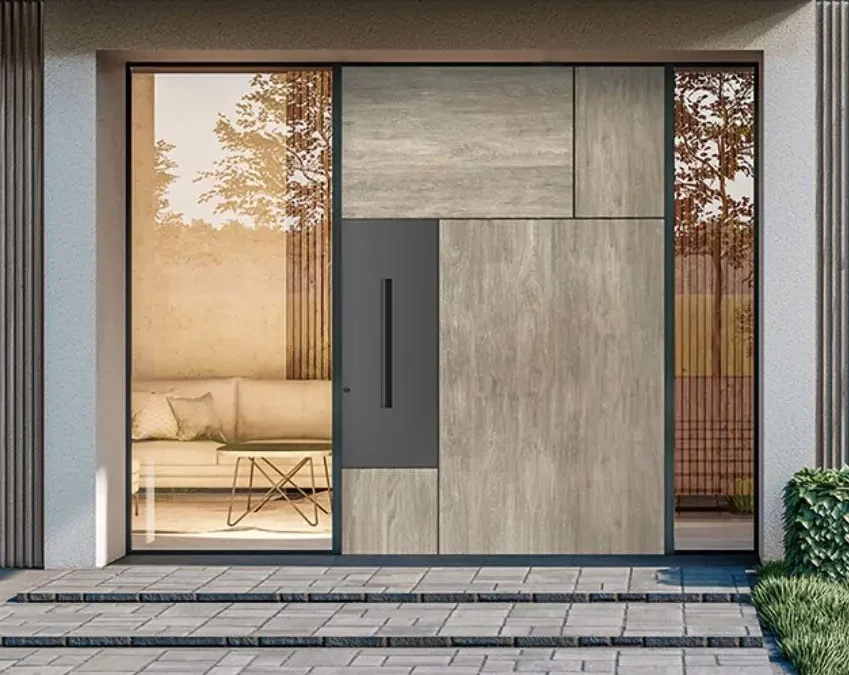
An aluminum exterior door has become increasingly popular in contemporary architecture. Known for slim frames and minimalist aesthetics, aluminum doors create a clean, upscale appearance that works especially well in modern homes.
Pros of Aluminum Exterior Doors
Sleek Contemporary Design
Aluminum doors are often chosen for their elegant appearance. Their narrow frames allow for larger glass panels and more natural light, creating a luxurious and modern entryway.
Corrosion Resistance
Unlike untreated steel, aluminum naturally resists rust and corrosion, making it a strong option for humid or coastal environments.
Lightweight Yet Strong
Aluminum is lighter than steel while still offering solid structural performance. This reduces strain on hinges and can improve long-term operation.
Low Maintenance
Most aluminum doors use powder-coated finishes that resist fading, peeling, and weather damage.
Cons of Aluminum Exterior Doors
Lower Impact Resistance
Although durable, aluminum is generally softer than steel and may dent more easily under heavy impact.
Thermal Conductivity
Without thermal breaks and quality insulation, aluminum can transfer heat and cold more easily than fiberglass. Premium models solve this issue with insulated cores and advanced frame technology.
Higher Cost for Premium Designs
Luxury aluminum systems with oversized glass panels and European styling often cost more than standard fiberglass or steel doors.
For homeowners seeking premium modern aesthetics, custom finishes, and large glass configurations, an aluminum exterior door is often the best stylistic choice.
Steel Exterior Doors: Best for Security
Steel doors remain one of the most common choices for homeowners focused on protection and durability.
Pros of Steel Doors
Superior Security
Steel doors are widely considered among the strongest residential entry door options. Their rigid construction provides excellent resistance against forced entry.
Fire Resistance
Steel doors can offer higher fire ratings compared to fiberglass alternatives.
Affordable Pricing
Steel doors are usually more budget-friendly than premium fiberglass or aluminum systems while still delivering strong performance.
Long Lifespan
With proper maintenance, steel doors can last for decades and maintain structural integrity under extreme weather conditions.
Cons of Steel Doors
Risk of Rust
Scratches or damaged coatings can expose steel to moisture, leading to rust over time.
Dents and Scratches
Steel surfaces can dent from impact, and repairs are not always easy.
Less Design Flexibility
Although modern steel doors come in many finishes, they generally offer fewer high-end contemporary design options than aluminum systems.
Steel doors are ideal for homeowners prioritizing security, affordability, and durability over architectural aesthetics.
Fiberglass Exterior Doors: Best Balance of Performance and Style
Fiberglass doors have grown in popularity because they combine durability, insulation, and attractive finishes.
Pros of Fiberglass Doors
Excellent Energy Efficiency
Fiberglass doors provide strong insulation performance and generally resist heat transfer better than metal doors.
Weather Resistance
Fiberglass won’t rust, warp, crack, or rot under normal conditions, making it ideal for varied climates.
Realistic Wood Appearance
Many fiberglass doors convincingly mimic natural wood grain while requiring far less maintenance.
Low Maintenance
Unlike wood or steel, fiberglass resists dents, corrosion, and moisture damage with minimal upkeep.
Cons of Fiberglass Doors
Higher Upfront Cost
Premium fiberglass doors can cost significantly more than basic steel models.
Slightly Lower Security Perception
While fiberglass doors can still be highly secure when reinforced properly, steel is often perceived as more resistant to heavy impacts.
Fiberglass is often considered the best all-around option for homeowners who want strong insulation, durability, and traditional styling.
Which Exterior Door Is Best?
The best exterior door depends on what matters most to you.
Choose Aluminum If:
- You want a sleek, modern appearance
- Large glass panels and minimalist design matter
- You prefer low-maintenance contemporary architecture
- You are investing in a luxury home design
Choose Steel If:
- Security is your top priority
- You want the strongest impact resistance
- You need a cost-effective solution
- Fire resistance matters
Choose Fiberglass If:
- You want the best balance of insulation and durability
- You prefer a traditional wood-like appearance
- You live in an area with moisture or extreme temperatures
- Low maintenance is important
Final Thoughts
Aluminum, steel, and fiberglass exterior doors each offer valuable advantages. Steel remains a top performer for security, fiberglass excels in insulation and versatility, and the modern aluminum exterior door continues to dominate luxury contemporary design.
For homeowners focused on premium aesthetics, slim sightlines, and European-inspired style, aluminum doors offer a sophisticated solution that blends security with architectural elegance.